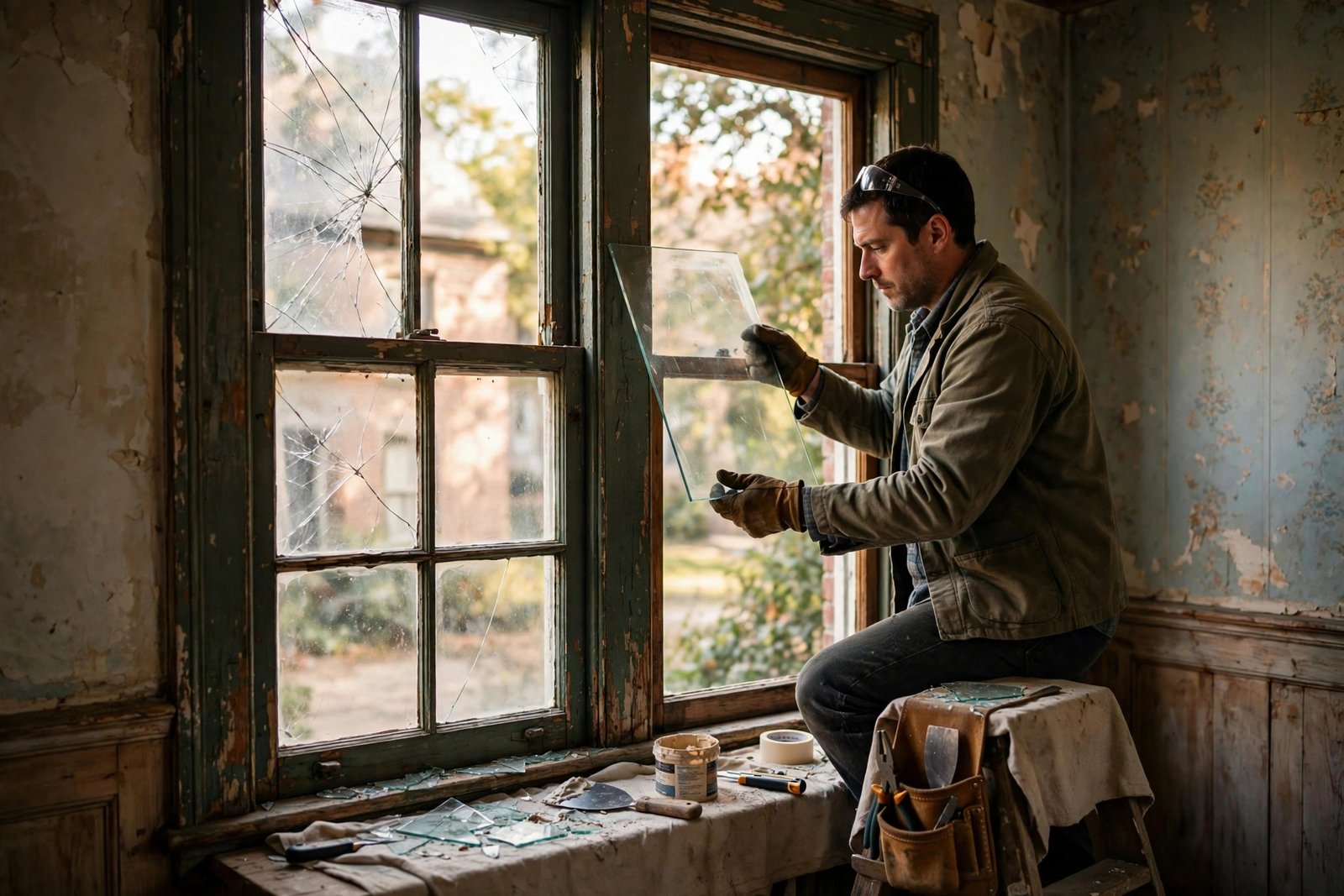
A window breaks, and for a few seconds your brain goes in three directions at once: is everyone okay, is someone in the house, and how much is this going to cost? The glass itself can wait a little. People and evidence come first. Here’s the checklist we’d want you to have, in the order that makes the most sense. It works for a house, an apartment or a small shop, and it’ll also make the call to a glass company go a lot faster.
The short version
Keep people and pets away, put shoes and gloves on, photograph everything before you touch it, clear the loose glass, cover the opening, call your insurer, then call a glass company with good photos. If it was a break-in, deal with the police first.
Step 1: Keep everyone away and protect yourself
Move people and pets out of the room and keep them out until the glass is cleaned up. Glass travels farther than you’d expect, and tiny slivers are easy to miss. Put on closed-toe shoes before you walk anywhere near it, and wear thick gloves and eye protection if you’ll be handling pieces. If anyone is cut, treat that first, and call 911 if the injury is serious.
Step 2: If it was a break-in or vandalism, call the right number
If someone may still be on the property, or you don’t feel safe, leave and call 911. If the incident is over and nobody is in danger, DC’s Office of Unified Communications asks residents to call 311 for police non-emergencies, and that includes vandalism and property damage. In some cases the Metropolitan Police Department also takes non-emergency reports online. Two practical points. Your insurer may ask for a police report number, and police sometimes ask you not to clean up until they’ve looked at the scene. If that’s your situation, take your photos and cover the opening for safety, but hold off on the full cleanup until you’ve been told it’s fine.
Step 3: Photograph everything before you move anything
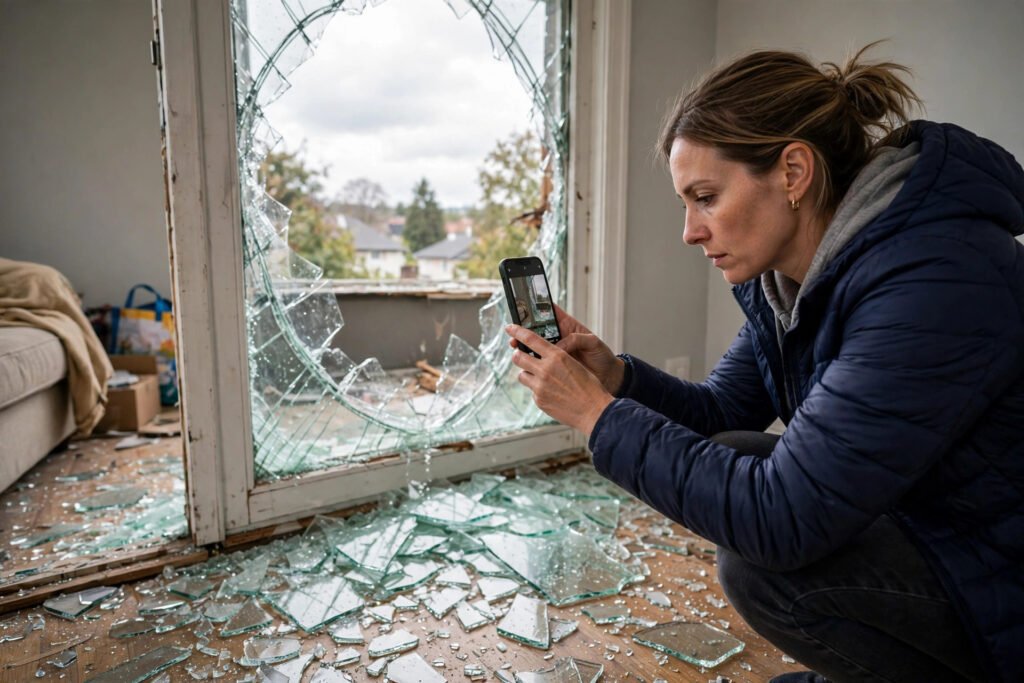
This is the step people skip, and it’s the one that matters most if you make an insurance claim. Take photos from several angles:
- A wide shot that shows the whole window or door and where it is
- Close-ups of the crack or break
- The outside, as well as the inside
- The glass on the floor and any damage to walls, floors or furniture
- Any small label or stamp on the edge of the glass, if you can see one
- The weather, if a storm caused it
Write down the date and time and what happened while it’s fresh.
Step 4: Clear the loose glass safely
With shoes and gloves on, pick up the larger pieces first and put them in a sturdy container, such as a heavy paper bag or a box you’ve doubled up. Then sweep with a broom and dustpan. For the fine slivers, a damp paper towel or the sticky side of wide tape works better than bare hands or a dry cloth. Check under furniture and in nearby rooms. A few cautions:
- Leave firmly stuck glass alone. If a shard is still locked in the frame and you can’t remove it safely, don’t pull on it. Tape it in place and let a professional take it out.
- Know what you’re dealing with. Tempered glass, common in doors and some windows, crumbles into small pebble-like pieces. Laminated glass cracks but tends to hold together. Both can be sharp.
- Vacuum with care. Opinions differ. If you use a vacuum at all, keep it for the last fine slivers, use a hose attachment, and empty it carefully afterward.
- Label the bag. Mark it “broken glass” so whoever handles your trash knows.
Step 5: Cover the opening
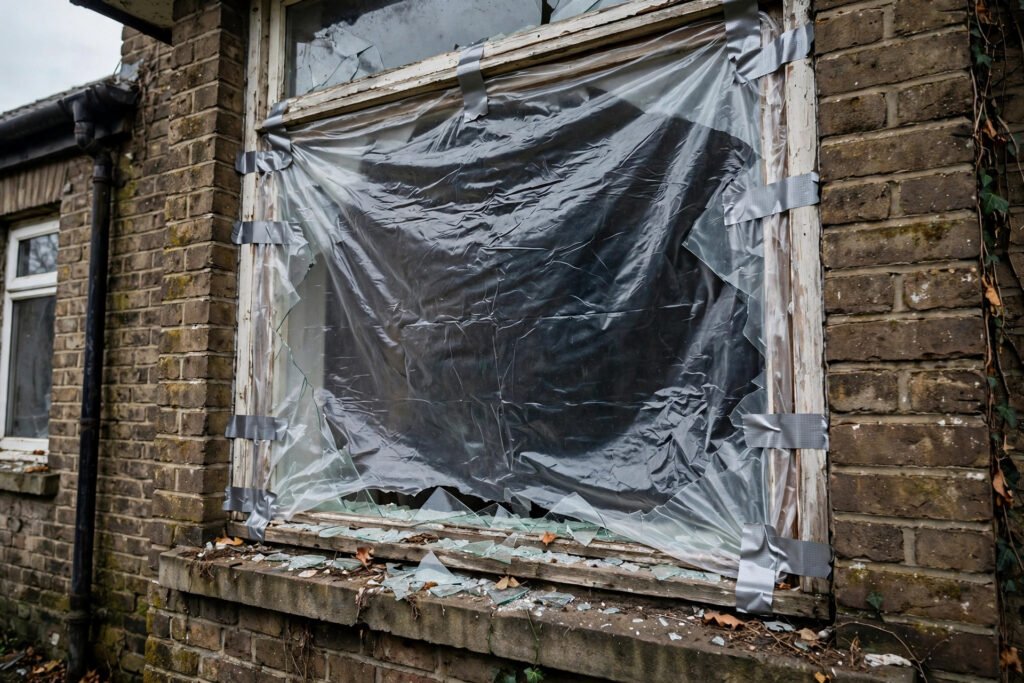
A temporary cover keeps out wind, rain and pests. It isn’t a security measure, so think of it as a bridge until the glass is replaced.
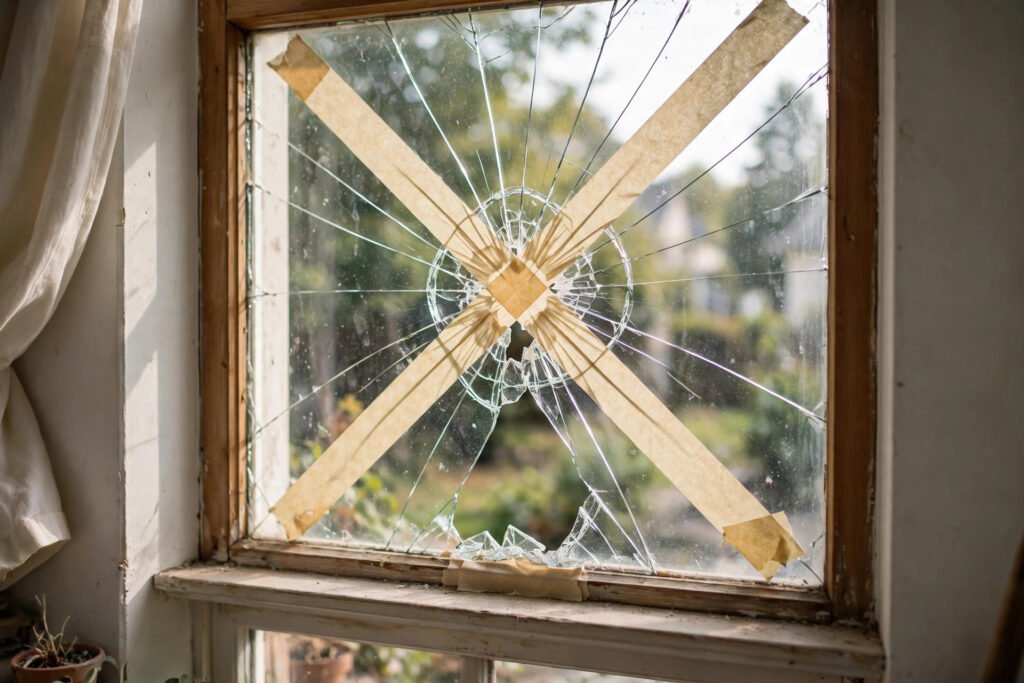
- If the glass is cracked but still in place, tape an X across it with painter’s tape or packing tape, on both sides if you can reach them. That helps hold loose pieces together.
- If the glass is gone, cover the opening with heavy plastic sheeting, thick cardboard or plywood. Wipe the frame clean and dry first so tape actually sticks.
- On a ground floor or after a break-in, plywood is sturdier than plastic. If the opening is large, or you aren’t comfortable doing it, ask a glass company about emergency board-up.
If you have a double-pane window, one pane may have broken while the other is intact. Cover it anyway. The damaged unit still needs to be replaced.
Step 6: Call your insurer and keep every receipt
Whether a broken window is covered depends on your policy and your deductible, so call your insurance company or agent to find out. Many policies cover glass broken by storms, vandalism or break-ins, though some don’t, and a repair that costs less than your deductible may not be worth a claim.
Either way, keep your photos, the police report number if there is one, and receipts for anything you buy to protect the property, like plywood, plastic or board-up service. Some policies reimburse reasonable temporary repairs, and you can’t claim what you can’t prove.
Step 7: Call a glass company, and give them the right details
You’ll get a faster, more accurate answer if you have this ready:
- The address, and the floor or unit if it’s a building
- What broke: a window, an entry door, a sliding door or a storefront
- Rough size, and whether it’s single-pane or double-pane if you know
- What happened, and when
- A few photos, including one of the whole window
- Access details: stairs, elevator, parking or loading limits
- Whether the property is a condo, a rental or in a historic district
- Who the invoice should go to, such as you, your landlord, your property manager or your insurer
It’s also fair to ask whether they can secure the opening for you until the new glass is ready, and to ask for a written estimate that you can send to your insurer.
A few special situations
Sliding and patio doors. These are usually tempered glass, so a break often means thousands of small pieces. Plan on a bigger cleanup and keep people away longer.
Storefronts. Don’t leave a broken storefront unsecured. Call about board-up so the business and the stock are protected, and tell your insurer promptly.
Historic homes. If you live in a DC historic district, replacing broken glass in an existing window is treated as repair and doesn’t need a building permit under DC’s preservation guidelines, but replacing the whole window does. Our guide to replacing windows or glass in a DC historic district explains the difference.
Condos and rentals. If you rent, report the damage to your landlord first. If you own a condo, check with your property manager or board, because exterior glass is often handled by the association.
What not to do
- Don’t pick up glass or walk near it barefoot.
- Don’t leave pieces hanging in the frame.
- Don’t clean up before photographing, and don’t clean up a break-in scene before the police say it’s okay.
- Don’t treat tape or plastic as a permanent fix.
- Don’t ignore a crack that’s spreading. It can fail suddenly.
Common questions
Is a cracked window an emergency?
Not always, but it shouldn’t be ignored. Cracks can spread, edges are sharp, and the window is weaker than it looks. Keep people away from it, tape it if you can, and get a photo to a glass company so they can tell you how urgent it is.
Does homeowners or renters insurance cover a broken window?
It depends on your policy, the cause of the damage and your deductible. Storm damage, vandalism and break-ins are commonly covered, and some policies include reasonable temporary repairs. Call your insurer, keep your photos and receipts, and ask for the details in writing.
Can a cracked pane be repaired instead of replaced?
In most cases, no. A crack in window glass tends to spread, and tempered glass that has shattered can’t be repaired at all. Light surface scratches can sometimes be polished out, but a cracked or broken pane is normally replaced.
How long can I leave a temporary cover on?
As short a time as you can manage. Plastic and tape won’t stand up to weather or stop an intruder for long, so schedule the replacement as soon as it’s practical.
Can I replace the glass myself?
A small, single pane in an accessible window can be a DIY job for someone who’s careful. Large panes are heavy, double-pane and tempered units are harder to handle, and a poor fit can leak or crack, so many people prefer to hire a professional.
This is general information, not legal or insurance advice. Policies and procedures vary, so check with your insurer and local authorities.
Need help with a broken window in Washington, DC?
Anderson Glass Contractors is based in Lorton, VA, and we take glass jobs across Washington, DC. Send us the address, a few photos and what happened, and we’ll talk through what the job needs and what comes next. If you need the opening secured, see our emergency board-up service, or learn more about window glass replacement.
Sources: DC Office of Unified Communications, “Call 311 for Police Non-Emergencies”; DC Metropolitan Police Department online reporting; DC Historic Preservation Review Board, Window Repair and Replacement Guidelines; general consumer guidance on documenting and covering broken glass.